September 28, 2026
How much is a Seed round? We counted all 117 rounds of September 2026 one by one
When talking to founders, one of the questions I hear most often is: "How much should I ask for?" The answer is usually based on hearsay. A round someone heard about, a figure mentioned on a podcast, a headline seen on LinkedIn.
Headlines are misleading because only massive rounds make the news. In this article, we'll do the exact opposite: we'll count an entire month.
We tracked 117 investment rounds announced in September 2026 with disclosed amounts. All the figures below come from that dataset. This is the first article in a series we will repeat every month.
The month's chart
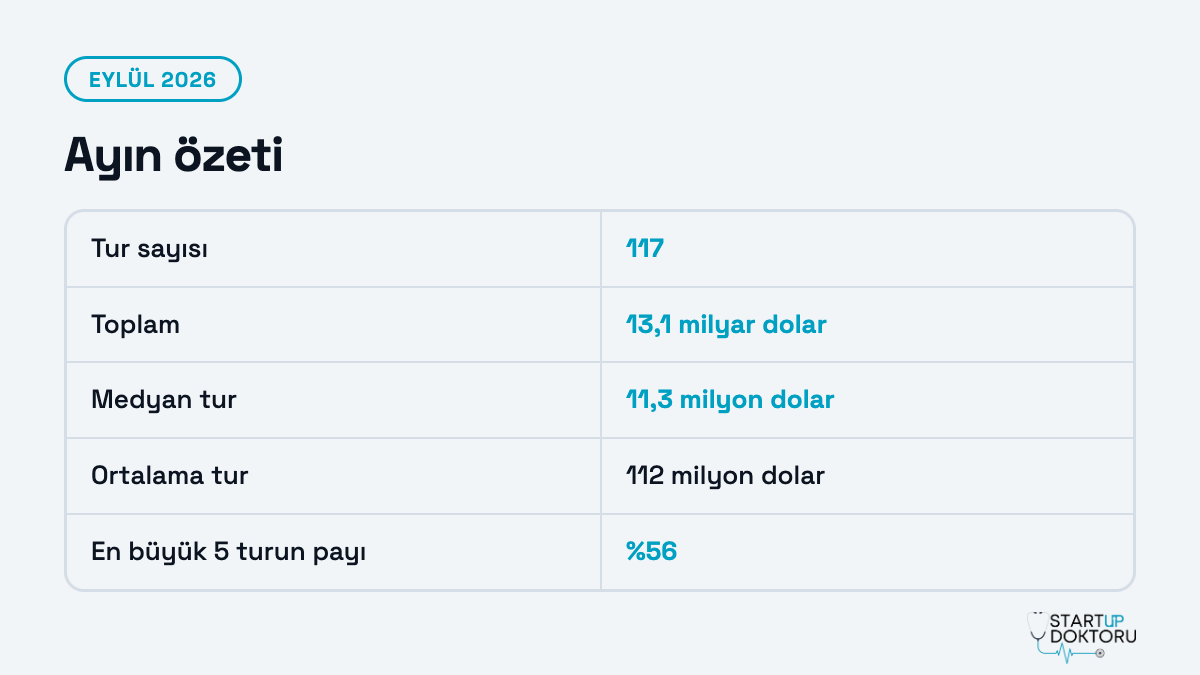
The first thing that stands out is the chasm between the median and the average. The median is 11.3 million, the average is 112 million. That's a tenfold difference.
This gap is no coincidence; it's the most important finding of the month. A few mega-rounds skew the average upward and obscure the real picture. If you plan your round based on the average, you're starting from the wrong place. Look at the median.
Real figures by stage
This is the part that actually helps. The round type was explicitly stated in 74 of the 117 rounds. The medians below belong exclusively to those 74 rounds.
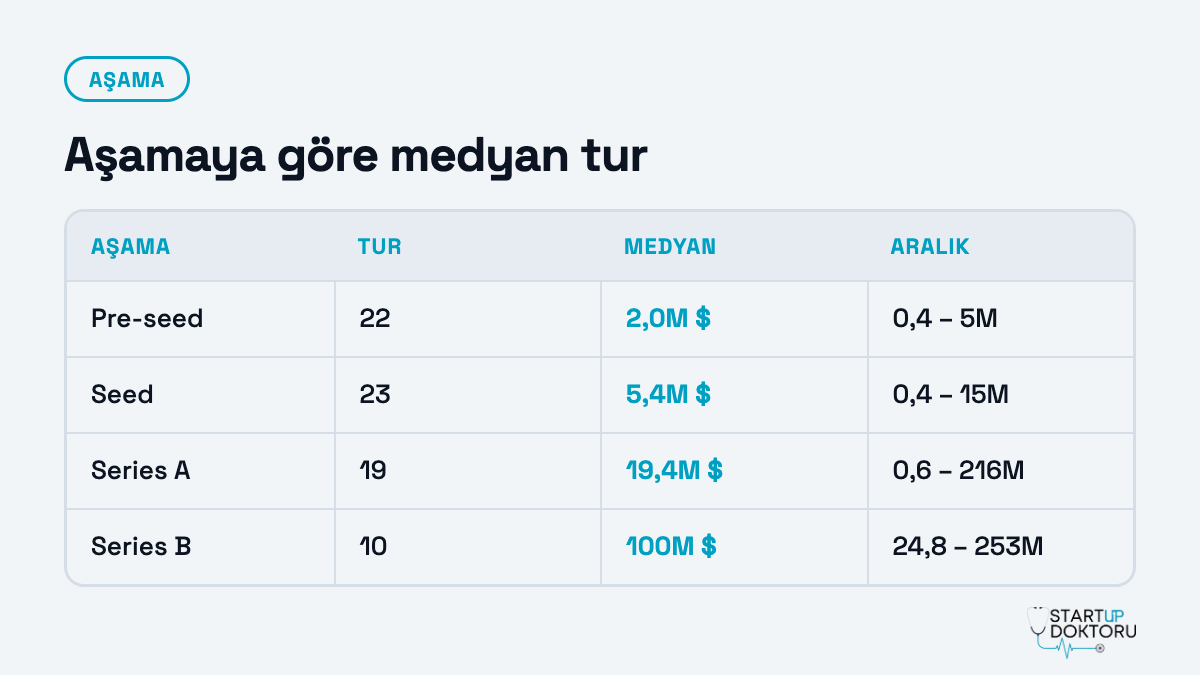
Make a note of this table. If you're asking for $2 million at pre-seed or $5.4 million at seed, you're right in the middle of the market. A $15 million seed round is possible, but that's at the absolute upper end of seed — there are only a handful of companies in that bracket across the entire month.
Take a look at the range column as well. In Series A, the smallest round is $600k and the largest is $216 million. That means "Series A" isn't a number, it's a stage. Telling an investor "We're doing a Series A" tells them nothing on its own.
How are round sizes distributed?
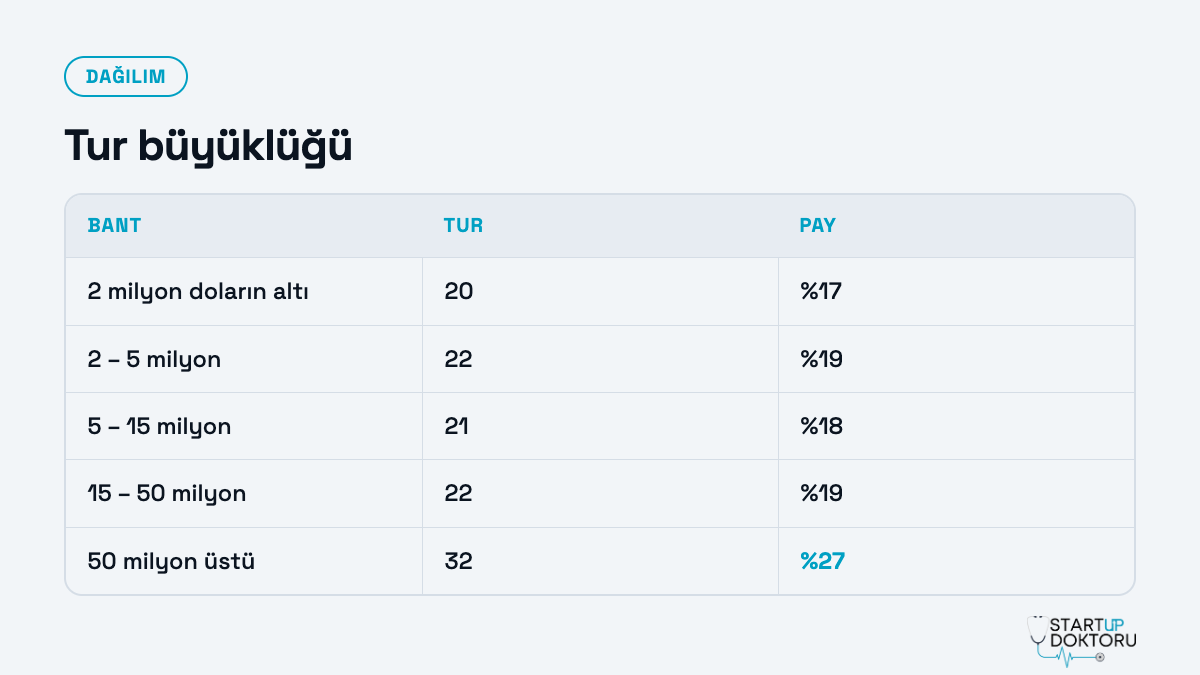
The distribution is surprisingly balanced. Smaller rounds haven't vanished: 36% of the month's rounds are under $5 million. Meaning capital is still flowing at the early stage.
However, while this breakdown is balanced by count, it is far from balanced when it comes to actual money.
The real story: The concentration of capital
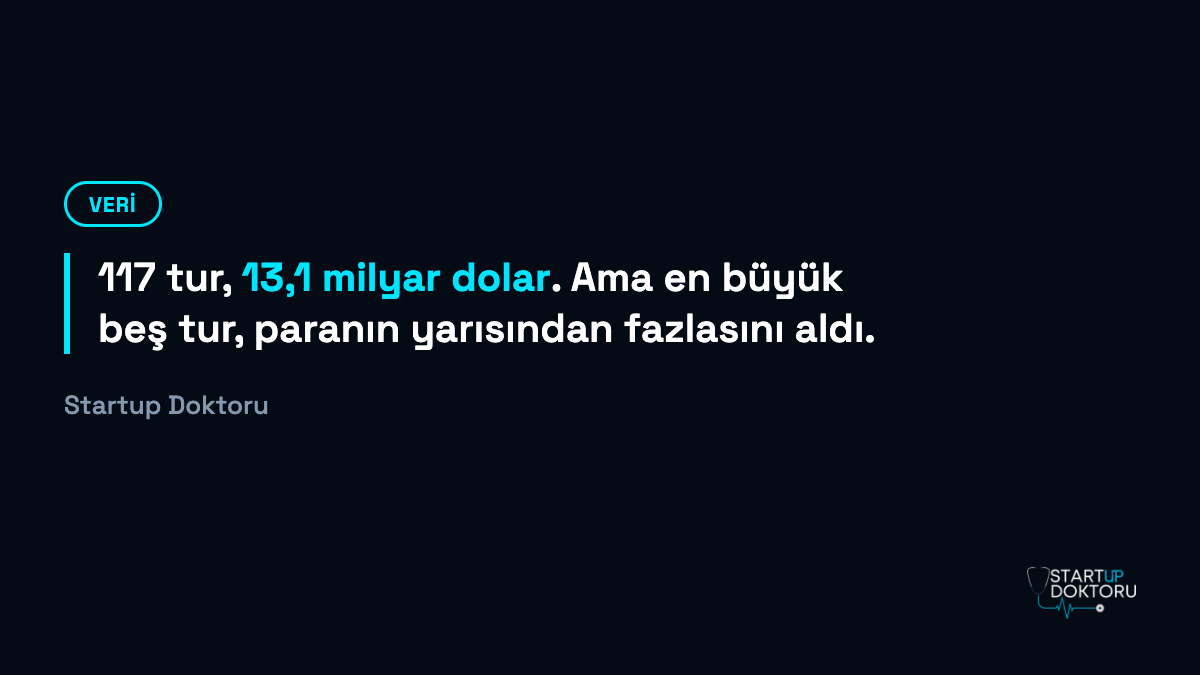
The top five largest of the 117 rounds took 56% of the month's total capital. Five companies took more than half of thirteen billion dollars.
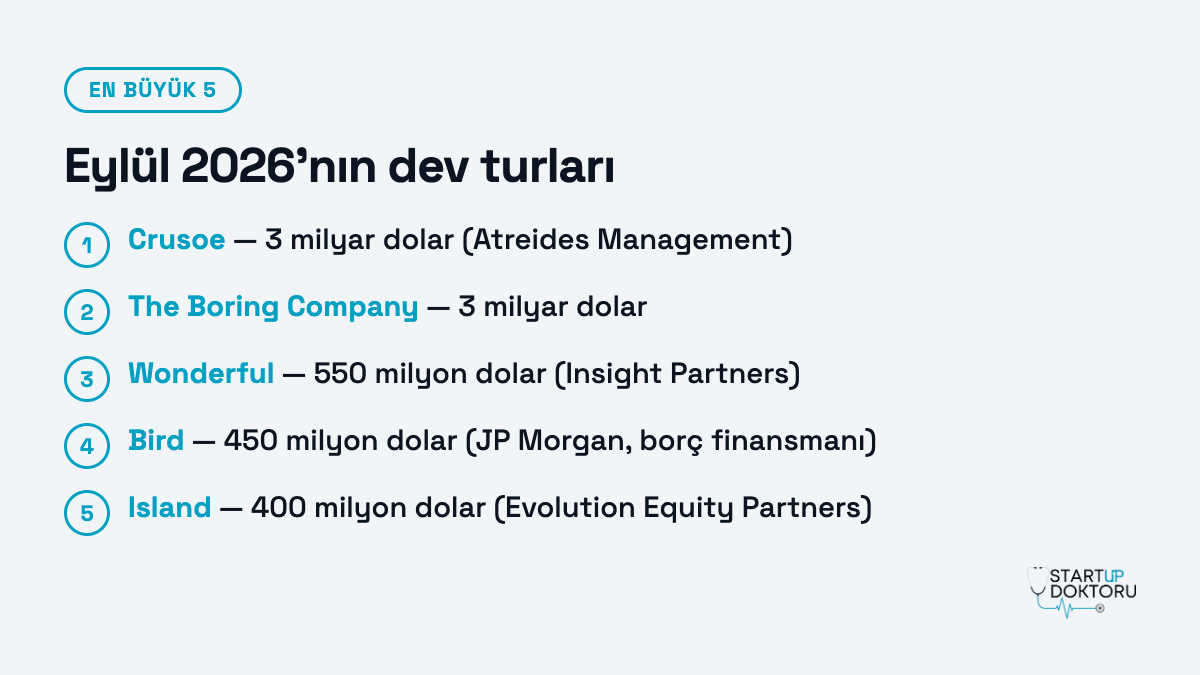
This concentration is not a one-month fluke. The same trend exists on a broader scale: in the first half of 2026, OpenAI and Anthropic combined took 43% of all venture funding globally.
For a founder, this means: the statement "there is a lot of money in the market" is true, but it's not the part that concerns you. Most of that money isn't circulating in your bracket. The competition in your bracket revolves around the median round.
The most active investors of the month
By number of rounds — not by total amount. This is what truly matters for an early-stage founder: who is writing a high volume of checks?
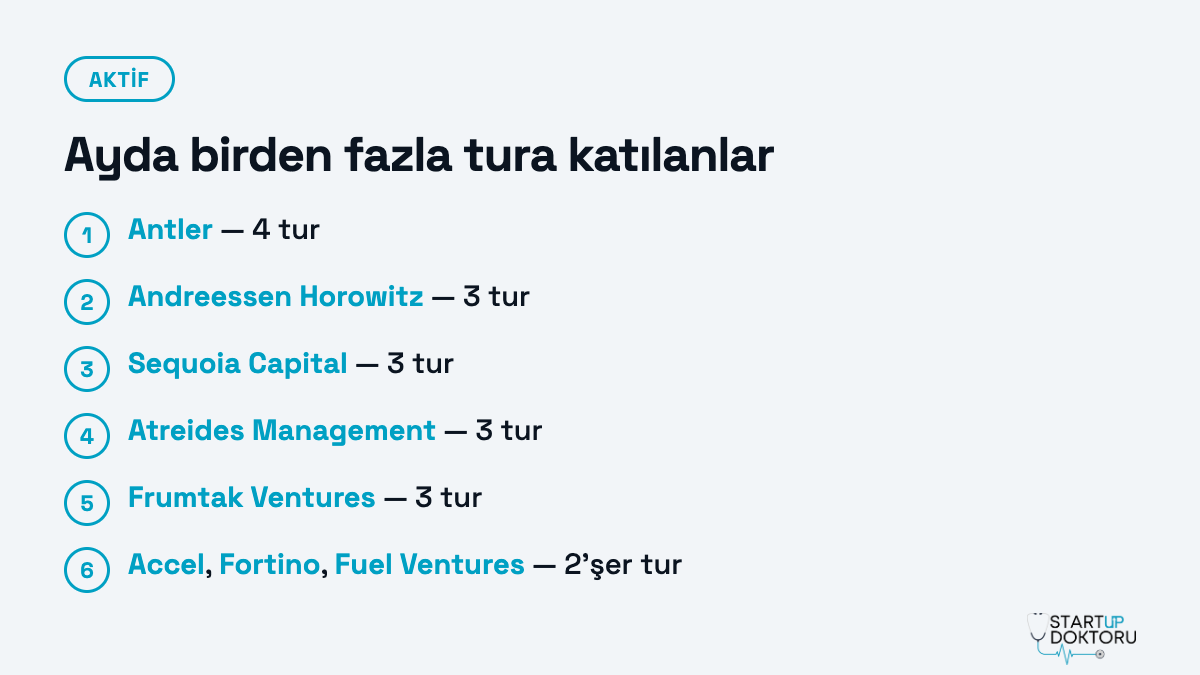
Antler being at the top of the list makes sense: it's a model that writes numerous small checks at the early stage. If you're looking for your next round, scanning this list is much more efficient than chasing a single mega-fund.
How we gathered this data — and what it doesn't cover
We need to be transparent, because if you're going to make decisions based on these figures, you should know their limits.
- Source: Public news feeds of Tech.eu, EU-Startups, ArcticStartup, and Webrazzi. We do not use paid databases.
- Only rounds with disclosed amounts were counted. Rounds that kept their figures private are not in the tables.
- Euro amounts were converted to dollars, so there is a currency impact.
- Round type was specified in 74 out of 117 rounds; stage medians are based solely on those 74 rounds.
- The scope is predominantly Europe. US and Asian rounds are only included to the extent they hit these sources.
- Fund closes, acquisitions, tender offers, and grant news were filtered out — these are not investment rounds.
So this is not a census of the entire market. It is a complete census of what landed in the public news feed for a single month. You have to read it with that distinction in mind.
What should you do with this table?
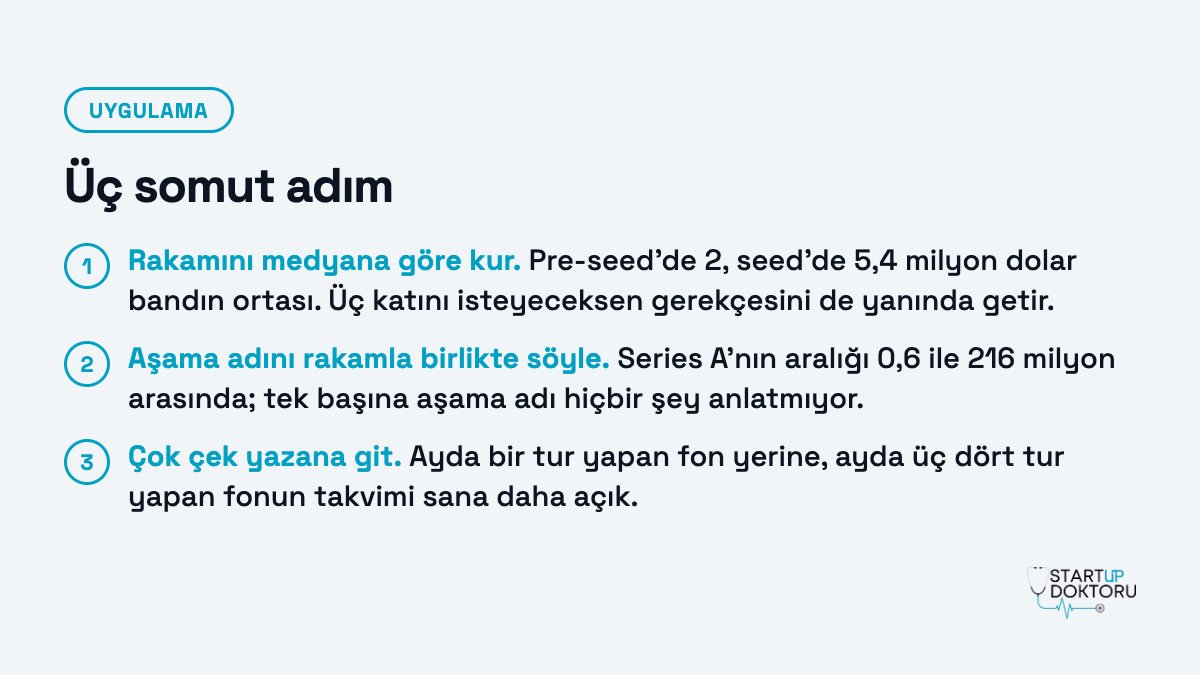
Let me add one final point. These figures give you a starting point, not bargaining power. The size of your round will ultimately be determined by your valuation and your needs; the median only shows you where you stand.
We'll run this exact same count again next month. Over time, what will truly be valuable is not a single month's figures, but the shift from month to month.
Frequently Asked Questions
How much is a Seed round?
In September 2026, the median for the 23 rounds specified as seed was $5.4 million, with a range between $400k and $15 million. This means the typical bracket for a seed is around $5 million; $15 million seed rounds are possible, but they sit at the absolute ceiling of seed.
How much should a Pre-seed round be?
In September 2026, the median for the 22 rounds announced as pre-seed was $2 million, with a range between $400k and $5 million. Asking for $2 million at pre-seed means you are right in the middle of the market.
How much funding does Series A mean?
In September 2026, the median for the 19 rounds announced as Series A was $19.4 million, but the range spanned from $600k to $216 million. That is why Series A doesn't convey a specific number on its own; you must always state the stage name alongside the actual amount.
How much total investment was made in September 2026?
A total of $13.1 billion across the 117 rounds with disclosed amounts in the public news feeds we track. 56% of this went to just the top five largest rounds: Crusoe, The Boring Company, Wonderful, Bird, and Island.
Should you look at the median or the average?
The median. In September 2026, the median round was $11.3 million while the average was $112 million — a tenfold difference. This gap is driven by a few mega-rounds. If you plan your round based on the average, you're starting from an unrealistic baseline.
Where does this data come from?
We collect it daily from the public news feeds of Tech.eu, EU-Startups, ArcticStartup, and Webrazzi. Only rounds with disclosed amounts are counted; fund closes, M&A, tenders, and grants are filtered out. We do not use paid databases, so our scope is limited to what these four sources publish.
Sources
- Tech.eu — European tech news feed — One of the primary sources for funding news
- EU-Startups — European early-stage round news
- ArcticStartup — Nordic and Baltic rounds
- Webrazzi — Turkish technology and investment news
- OpenAI and Anthropic Take 43% of H1 2026 Venture Funding — AI Weekly — Global concentration rate
Can you defend your number?
Knowing the median is just the starting point. When facing investors, the real question is how you justify the amount you're asking for. I explain how to build your valuation in a free training session. Check out the free training.
Ready to take your startup up a level?
See the Ebook ($6)